
Hard water starts small. A white ring shows up around the faucet. Glasses come out cloudy. The showerhead sprays sideways. Most homeowners clean it off and move on, but the same minerals are building inside the plumbing too.
In Northwest Indiana, hard water plumbing damage can affect pipes, fixtures, water heaters, and water-using appliances. It does not happen overnight. It builds over months and years. Trapmasters Plumbing sees this in local homes often, especially in systems that have gone too long without service. This guide explains scale buildup, appliance wear, water heater efficiency, and practical ways to reduce the damage.
The First Signs Usually Show Up Around Fixtures
Hard water does not usually start with a major leak. It tends to show itself through small changes in daily use. You may notice the bathroom faucet looks crusty again two days after cleaning it. The shower may feel weaker than it used to. Those signs are easy to ignore, but they tell you minerals are collecting somewhere.
White buildup around faucets
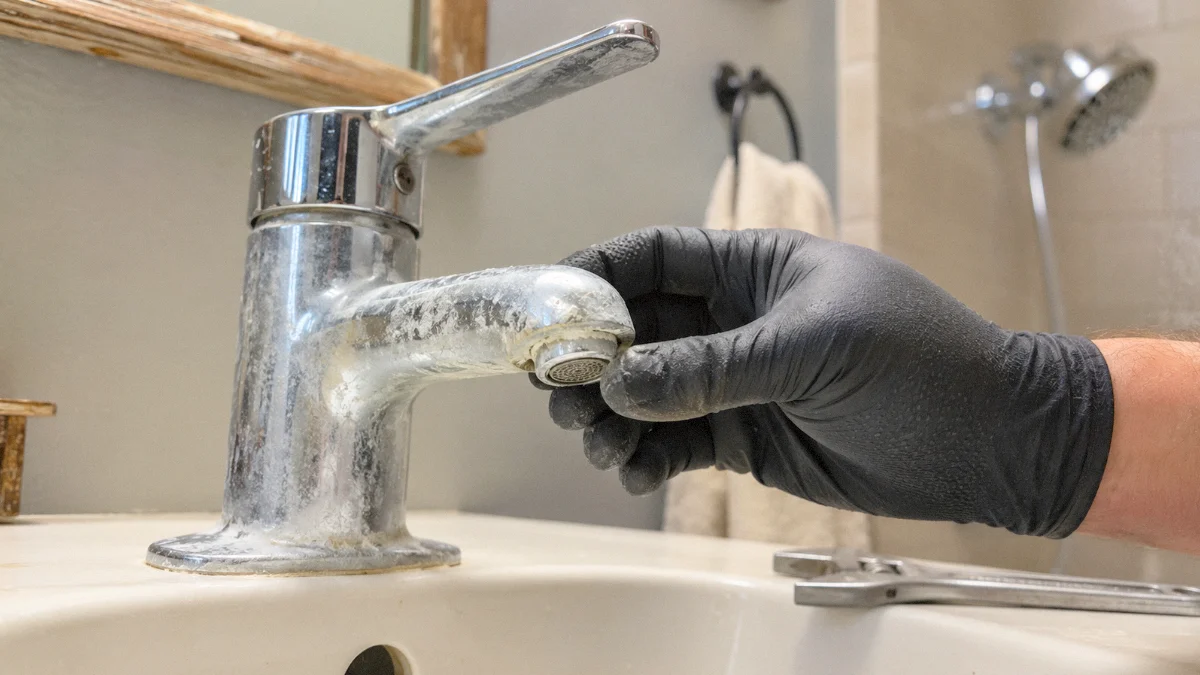
That chalky white crust around a faucet is mineral scale. It forms after hard water dries and leaves calcium and magnesium behind. The buildup may sit around the base, spout, or handle. It can also work its way into the fixture.
Uneven shower spray
A showerhead has tiny openings, and hard water clogs them one by one. The spray starts to shift, weaken, or shoot in odd directions. Cleaning helps for a short time. The buildup comes back when the hard water issue stays the same.
Faucets that drip or feel stiff
Hard water can affect the small parts inside a faucet. Cartridges, seals, and washers all need clean movement. Scale gets in the way. The handle may get harder to turn, or the faucet may keep dripping after shutoff.
Scale Buildup Is the Real Plumbing Problem
Scale is the hard mineral layer left behind by hard water. You see it outside the faucet, but it also forms inside pipes and fixtures. That hidden buildup causes the bigger trouble. It steals space inside the plumbing and adds stress to parts that should move freely.
Pipes lose room inside
Water lines are built to carry a steady flow. Scale sticks to the inside wall of the pipe and takes up space. The opening gets smaller over time. Then water has to push through a tighter space.
Water pressure drops slowly
A sudden pressure drop feels obvious. Hard water pressure loss is sneakier. The shower weakens a little. Then the bathroom sink feels slower. Then the kitchen faucet takes longer to fill a pot. That slow change often points to scale inside the system.
Valves and fittings take extra wear
Shutoff valves and fittings do a lot of work behind the scenes. Hard water makes them stiff and less reliable. A valve that should turn smoothly may freeze up over time. A fitting may start leaking after years of mineral stress.
Hard Water Damage Pipes Over Time
Hard water plumbing damage rarely looks dramatic at first. Pipes can keep working for years with scale inside them. That is part of the problem. The system still runs, so repairs get pushed off.
Older plumbing in Northwest Indiana homes can feel this more. Age already wears on pipes, seals, and fittings. Hard water adds another layer of strain. Trapmasters Plumbing often finds that small repeat repairs trace back to long-term buildup.
Metal pipes can corrode faster
Scale can trap moisture against metal surfaces. That adds stress to older pipe material. Corrosion may start in weak spots. Once that happens, leaks become more likely.
Pipe joints can become problem areas
Joints and elbows already deal with pressure changes. Mineral buildup collects around those tighter spots. Water flow gets less smooth. Over time, those areas become more likely to leak or clog.
Repairs may keep repeating
One faucet repair here. One weak shower there. A shutoff valve that will not turn. These problems may seem separate, but hard water often connects them. The pattern matters more than one single issue.
Water Heaters Feel Hard Water Fast
Water heaters take a heavy hit from hard water. Heat makes minerals separate from the water faster. Those minerals settle in the tank and form sediment. Over time, the tank has to work through that layer.
This is where water heater efficiency starts to drop. The unit still heats, but it has to work harder. Homeowners may notice noise, slower recovery, and hot water that runs out faster than it used to.
Sediment builds at the bottom
Minerals settle at the base of the tank. That layer thickens each year without flushing. It takes up space and blocks heat from reaching the water cleanly. The heater has to push harder to do the same job.
Popping or rumbling starts
A noisy water heater often points to sediment. Water gets trapped under the mineral layer during heating. That creates popping, rumbling, or crackling sounds. Many homeowners think the tank is just getting old, but hard water is often part of the story.
Hot water runs out faster
Sediment reduces the tank’s working space. It also slows heating. A family may run out of hot water sooner after showers, laundry, or dishes. That is a common sign that the heater needs service.
Appliances Can Wear Out Earlier
Hard water does not stop at pipes and fixtures. It moves through dishwashers, washing machines, ice makers, and water heaters. Those appliances have small valves, screens, and parts that do not like mineral buildup.
A machine can still run and still be wearing down. That is what makes the damage hard to spot early. Performance drops first. Then repairs come sooner. Then replacement comes earlier than planned.
Dishwashers may clean poorly
Hard water leaves spots on dishes and film inside the dishwasher. It can clog small spray openings too. The machine works harder, but dishes may still come out cloudy. Homeowners often blame the detergent first.
Washing machines face buildup
Hard water can leave mineral deposits inside hoses, valves, and internal parts. Clothes may feel less clean. Soap may not rinse well. The machine keeps running, but mineral buildup adds wear over time.
Water-using parts fail sooner
Small parts suffer first. Screens clog. Valves stick. Seals wear. Those small failures can shorten appliance lifespan and increase repair calls.
The Cost Adds Up Quietly
Hard water is expensive in a quiet way. It does not always create one large repair right away. It creates a long trail of smaller problems. A faucet part. A clogged showerhead. A water heater flush that waited too long. A dishwasher that stops cleaning well.
Then there is energy use. A water heater with sediment needs more effort to heat water. That can raise monthly costs. The system does more work and gives you less performance.
Hard water plumbing damage can also shorten the life of appliances. That cost feels different from a plumbing repair, but it still comes out of the homeowner’s pocket. Fixing the cause early helps protect more than the pipes.
What Helps Reduce Hard Water Damage
Hard water does not have to keep wearing down the home unchecked. There are practical ways to reduce the damage. Some steps are simple maintenance. Others involve treating the water before it moves through the plumbing.
Flush the water heater
Tank flushing removes sediment from the bottom of the water heater. That helps the unit heat better and recover faster. It can also reduce noise. A yearly check is a smart habit for many homes.
Clean fixtures before buildup gets heavy
Faucets and showerheads last longer when scale does not sit on them for months. Cleaning the aerator and showerhead helps keep flow steady. It does not solve the whole hard water problem, but it protects the parts you use every day.
Check pressure changes early
Weak pressure in one fixture may be a small issue. Weak pressure across the home can point to something deeper. Catching that pattern early can help prevent larger repairs later.
Ask about a water softener
A water softener reduces the minerals that create scale. It helps protect pipes, fixtures, water heaters, and appliances. For many homes with hard water plumbing damage, this is the strongest long-term fix.
When a Plumber Should Take a Look
Some hard water issues go past cleaning. Repeated fixture trouble is one sign. Low pressure in more than one area is another. A noisy water heater deserves a closer look too.
Trapmasters Plumbing checks the full system, not just the most obvious symptom. We look at the fixture, the piping, the water heater, and the areas where buildup tends to collect. Then we explain what we find in plain language. You get clear answers before repair work starts.
A plumbing inspection can help you decide what matters now and what can wait. That saves money and stress. It also helps you avoid guessing at the wrong repair.
Hard Water Plumbing Damage in Northwest Indiana? Let’s Get Ahead of It
Hard water can clog fixtures, narrow pipes, shorten appliance lifespan, and drag down water heater efficiency. The signs usually start small, but they do not stay small forever. A little buildup today can turn into weak pressure, noisy equipment, and avoidable repair costs later. Don’t Let Your Money Go Down The Drain.
Trapmasters Plumbing helps homeowners across Northwest Indiana deal with hard water plumbing damage, fixture trouble, and water heater issues. Call to schedule service or request a free estimate. Our courteous crew will inspect the problem, explain what is happening, and help you protect your home.